

Is AI a Real Threat to Music Innovation or Just Hype in 2026
Music technology has always been a field of rapid change and passionate debate. Today, the rise of artificial intelligence (AI) in music creation sparks questions similar to those asked during past technological shifts. Is AI a genuine threat to music innovation, or is it just another wave of hype? To answer this, we need to look back at how music technology evolved from the 1980s to today, reflect on personal experiences with early music computers, and understand how AI fits into this ongoing story.
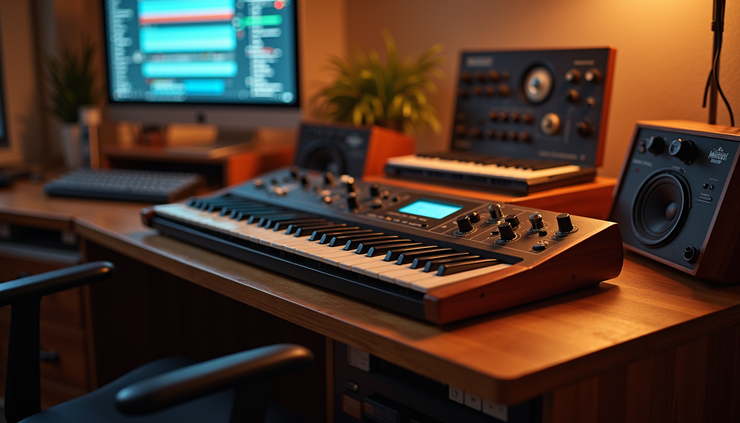
Early music workstations in the 1980s set the stage for today's digital music revolution.
The Evolution of Music Technology Since the 1980s
The 1980s marked a turning point in music production. Before this era, recording and producing music required expensive studios and large teams. The introduction of MIDI (Musical Instrument Digital Interface) in 1983 changed everything. MIDI allowed electronic instruments and computers to communicate, making it possible to control multiple devices from a single interface.
Drum machines like the Roland TR-808 and synthesizers became staples in studios and live performances. These tools gave musicians new ways to experiment with sound and rhythm without needing a full band. The 1980s also saw the rise of affordable home studios, where artists could produce music independently.
Moving into the 1990s and 2000s, digital audio workstations (DAWs) like Pro Tools and Cakewalk transformed music production further. These software platforms enabled detailed editing, mixing, and mastering on personal computers. The internet expanded access to music and collaboration, breaking down barriers between artists worldwide.
Today, AI tools can compose melodies, generate beats, and even mimic human voices. This progression from analog to digital to AI-driven music reflects a continuous trend: technology reshaping how music is made and experienced.
Personal Memories of Early Computer Music Production
I remember the first time I used a computer for music production in the late 1980s. It was a bulky machine with limited memory and processing power. The software was basic, often requiring command-line inputs and long waits for sounds to render. Yet, the excitement of programming a simple melody or drum pattern was unmatched.
One project involved connecting a MIDI keyboard to the computer and layering synthesized sounds. The process was slow and sometimes frustrating, but it opened new creative doors. It felt like being part of a secret club of pioneers exploring uncharted territory.
These early experiences taught me that technology in music is not about replacing musicians but about expanding their toolkit. The challenges of those days made every breakthrough feel rewarding.
How AI Mirrors Past Innovations Like MIDI and Drum Machines
AI in music shares many similarities with past innovations such as MIDI and drum machines. Each new technology initially faced skepticism and fear of replacing human creativity. Yet, over time, these tools became accepted as extensions of the artist’s expression.
MIDI standardized communication between instruments, allowing unprecedented control and flexibility.
Drum machines introduced programmable rhythms that shaped entire genres like hip-hop and electronic dance music.
AI now offers assistance in composing, arranging, and sound design, often speeding up workflows and suggesting ideas.
None of these technologies eliminated the need for human input. Instead, they shifted the role of the musician toward more creative decision-making. AI can generate patterns or harmonies, but it still requires a human to guide, edit, and infuse emotion into the music.
The Importance of Adaptation in the Music Industry
The music industry has always thrived on adaptation. Artists and producers who embraced new tools often found fresh ways to connect with audiences. Those who resisted change risked falling behind.
Consider how the introduction of sampling in the 1990s transformed hip-hop and pop music. Initially controversial, sampling became a creative cornerstone. Similarly, streaming platforms changed how music is distributed and consumed, forcing artists to rethink marketing and revenue models.
Adapting to AI means learning how to use it as a collaborator rather than fearing it as a competitor. Musicians who explore AI tools can discover new sounds, automate tedious tasks, and focus more on artistic vision.
Embracing AI as a Tool for Creativity
AI should be seen as a tool that supports creativity, not a replacement for human artistry. It can:
Generate ideas when inspiration runs dry
Help with complex arrangements or harmonies
Analyze trends to suggest styles or sounds
Automate repetitive tasks like mixing or mastering
By integrating AI into their workflow, musicians can push boundaries and explore new genres. Tech enthusiasts can appreciate how AI algorithms learn from vast datasets to create music that feels fresh yet familiar.
The key is balance. Musicians must maintain control over the creative process and use AI to enhance, not dominate, their work.
Music technology has always sparked debate about the future of creativity. Looking back at the evolution from MIDI and drum machines to today’s AI tools shows a clear pattern: new technologies challenge us, but they also open new possibilities. Early experiences with computers for music production reveal that embracing change leads to growth.
So waht do you think? I would love to here your opinions, but please be respectful. This is a discussion, not an argument. Thank you...


Comments